
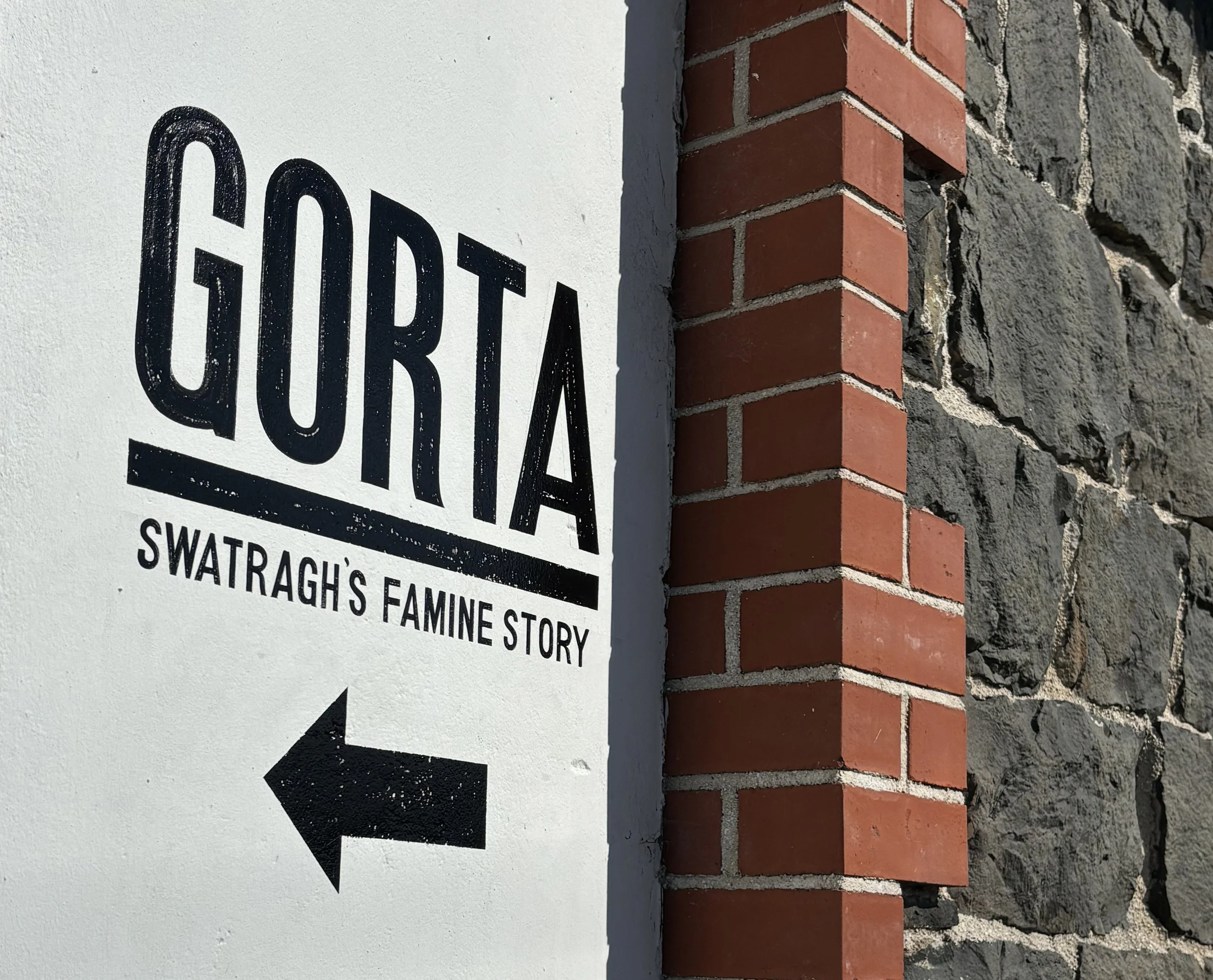
Step back in time in Swatragh, at the original premises of a surgery where local doctor Daniel Mooney and his wife Sarah set up a soup kitchen during the Great Irish Famine of 1845-52.
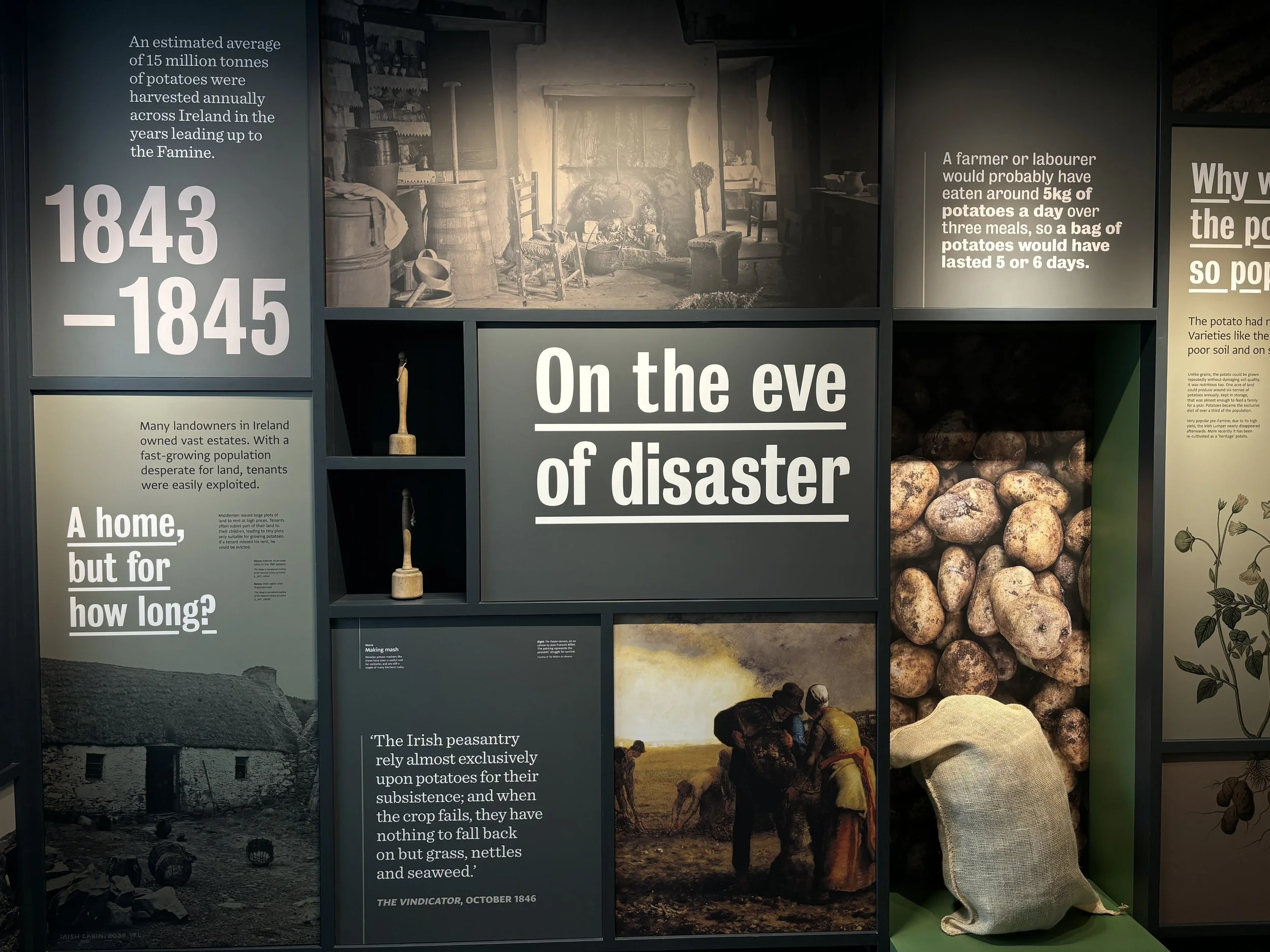
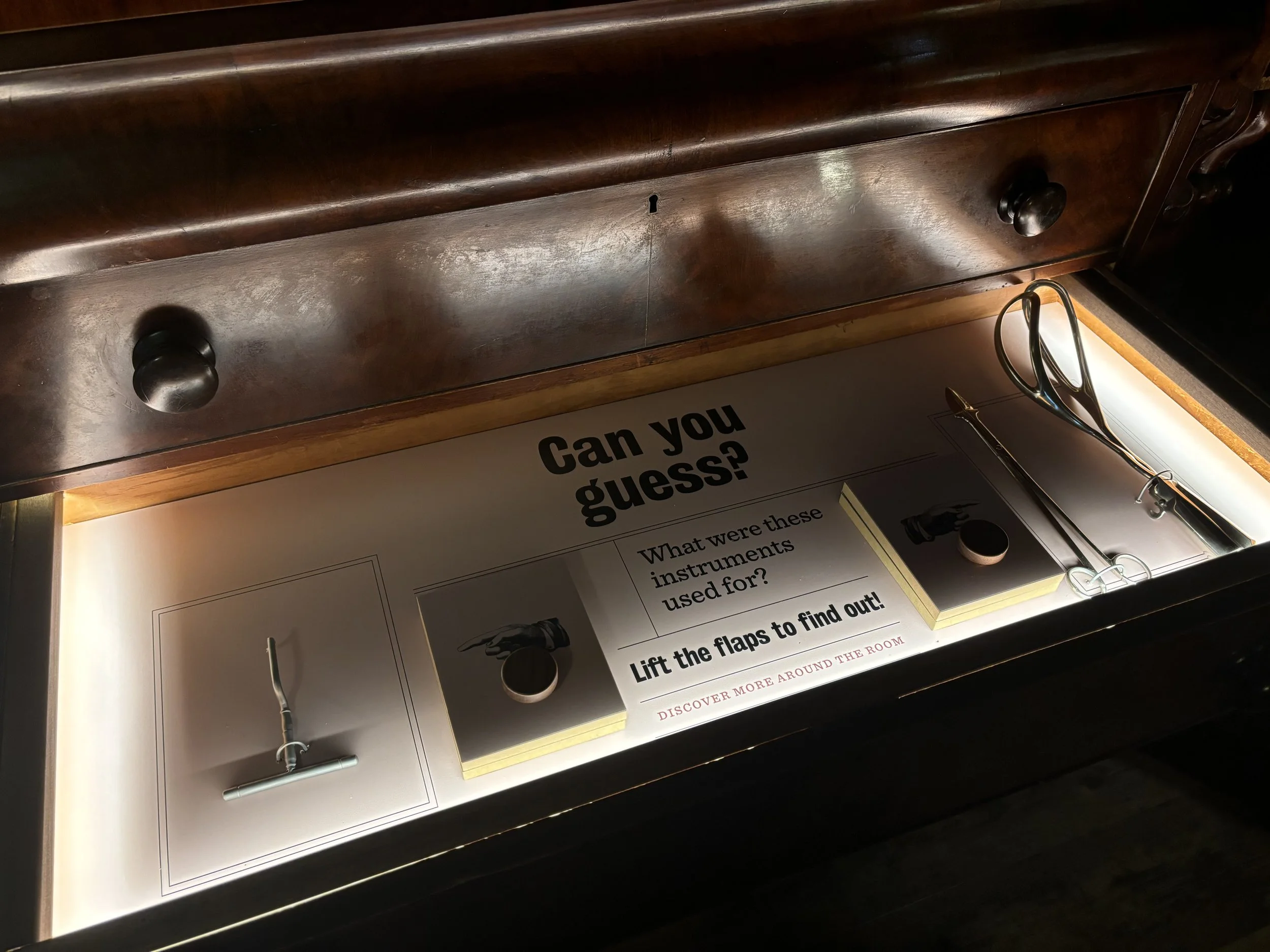
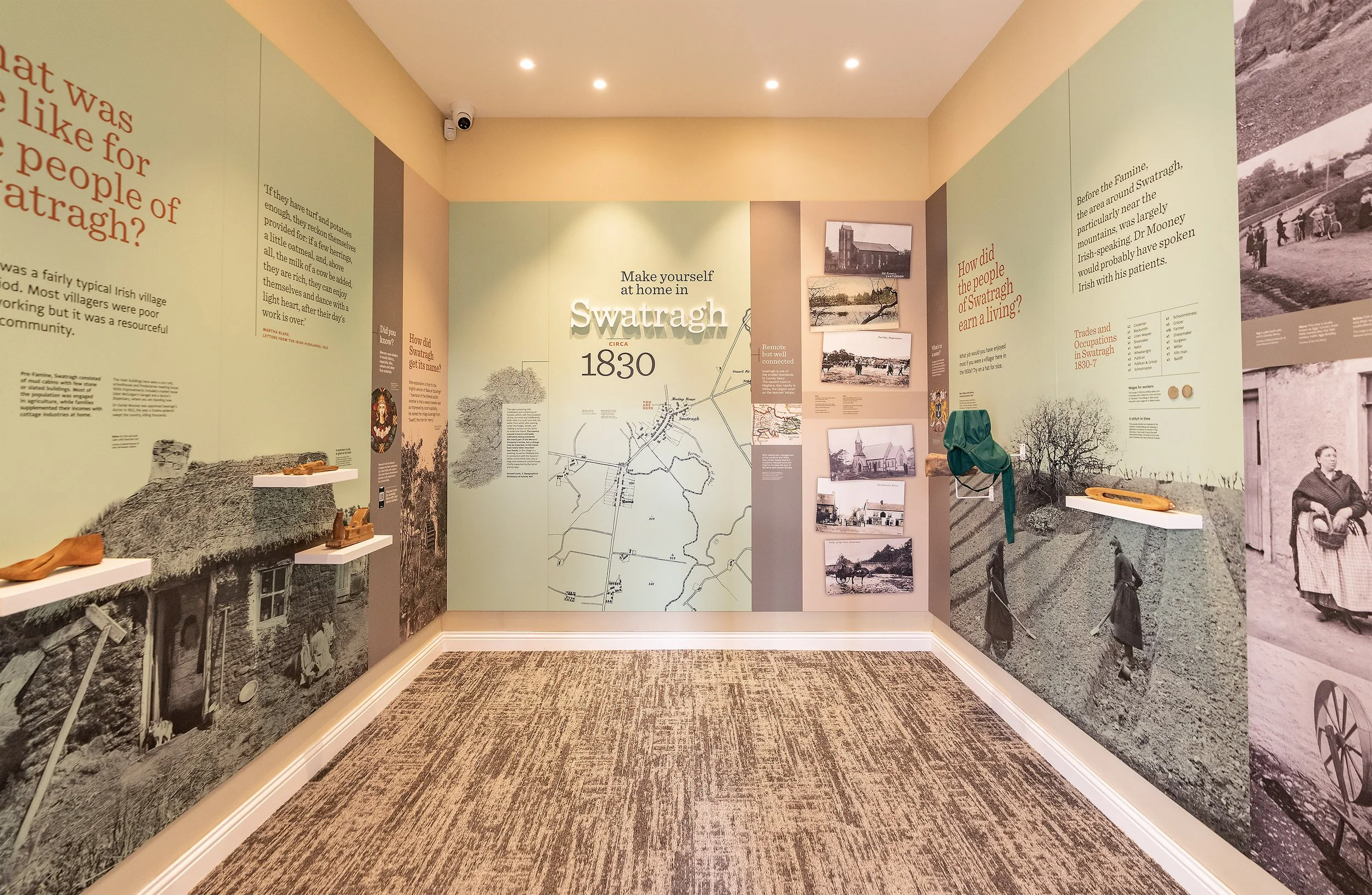
Working closely with the small but dedicated team at the property, we developed an experience where visitors are introduced to Swatragh in the 1830s. Tactile objects, interactives, AV projections and audio help to draw visitors into the everyday lives of this small but tight-knit community. The population’s reliance on the potato crop for their livelihood is interpreted, as well as differing attitudes between villagers and landlords.
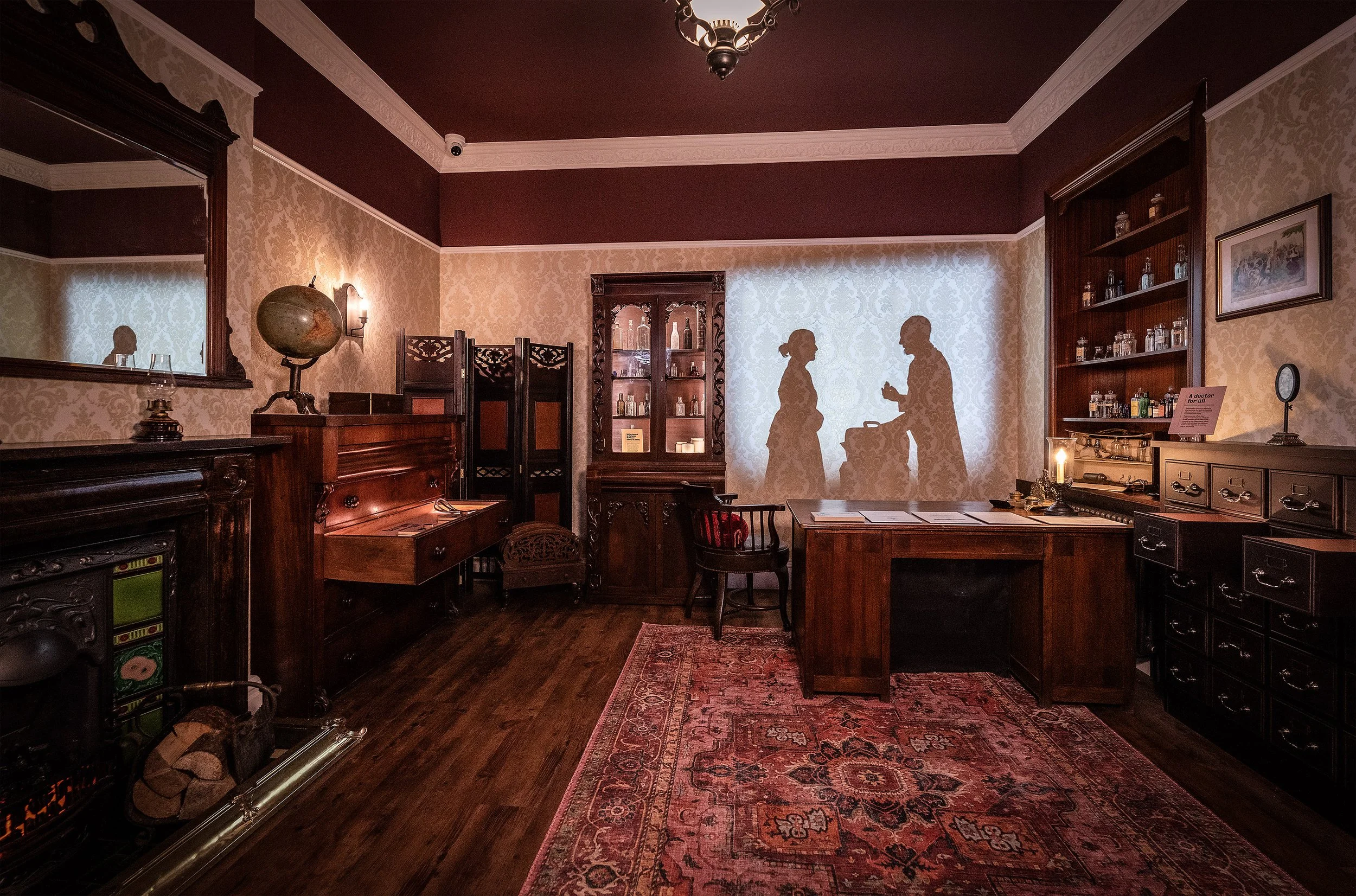
The full implications of the devastating Famine are explored through emotive silhouettes, bog oak sculptures and sensitive interpretation on how the Famine affected the population of Ireland and Swatragh particularly, from emigration to entering the workhouse, evictions, disease and death.
In the reimagined kitchen, complete with working Victorian range, concealed audio allows visitors to eavesdrop on the Mooneys as they discuss opening their own soup kitchen. Tactile scent boxes, setworks and integrated interpretation in the equipment engage visitors in unexpected ways.
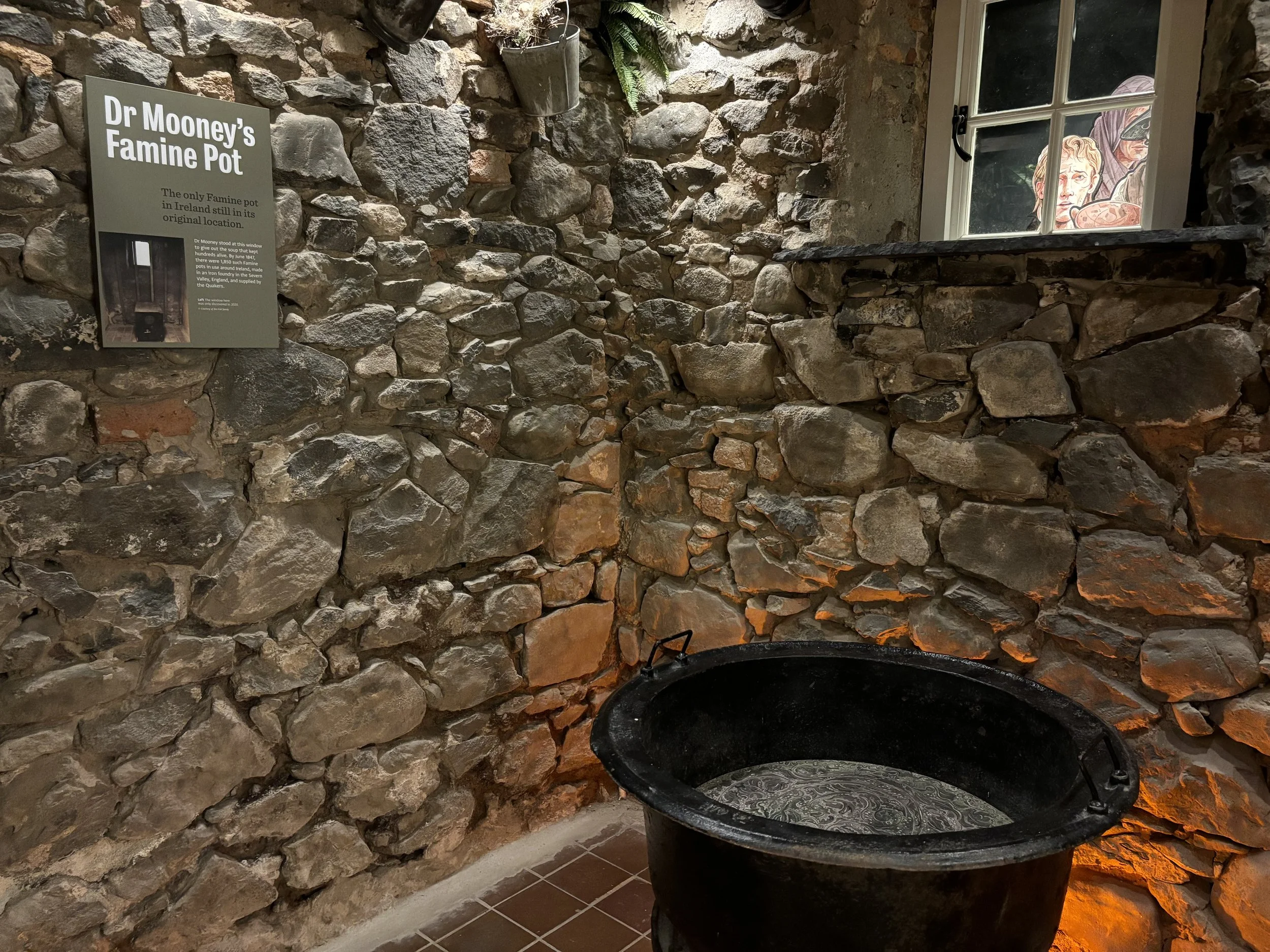
The original soup pot in situ is a poignant culmination to the visitor experience. The final zone reflects on the legacy of the Famine, as well as the Friel family who have kept the story alive.
Visitors are left with an understanding of the effects of the Famine on the island of Ireland, seen through the personal stories of Swatragh and the community who came together for survival.
Tandem were engaged to bring to life the experience of the village and its inhabitants during the Famine in a sensitive, authentic and experiential way.
Services:
Interpretation Strategy
Development of concept proposals
Research and narrative development
Overseeing copywriting
Image licensing
Scheme design
Detailed design
Technical design
Graphic design and artwork
Overseeing production and installation